
Practicing My Grandmother's Hands
Prerequisite for Part 1 - Seeing White - Foundations for White Women
Prerequisite for Part 2 - Practicing “My Grandmother's Hands” Part 1
Please note: This cohort spans multiple days, in two parts. See specific dates below.
Dates:
Part 1 - Monday, May 4 - June 29; (8 sessions - 5/4, 5/11, 5/18, 6/1, 6/8, 6/15, 6/22, 6/29)
Part 2 - Monday, Sept 14 - Oct 5; (4 sessions - 9/14, 9/21, 9/28, 10/5)
Time:
5:30-7pm ET
To determine the event time in your local time zone, use a time zone converter to convert from Eastern Time (ET).
Location:
Virtual
Program Description:
A personal and community experience of reading Resmaa Menakem's seminal book, My Grandmother’s Hands. This is a unique opportunity to explore the book’s thought leadership and experiment with the practices in community with your Tapestry sisters. We will navigate this incredible book in a supportive, collective space where we continually learn together.
You will leave this experience with a deeper understanding of what Resmaa describes as “racialized trauma and the pathway to mending our hearts and our bodies” and will experience “an alternative view of what we can do to grow beyond our entrenched racialized divide and through a healing process based on the latest neuroscience and somatic healing methods.”
Prior to gathering, you’ll need to purchase the book.
This experience is open to anyone who meets the prerequisites listed above. Our particular motivation for this offering is to explore the thought leadership and practices in My Grandmother’s Hands in advance of our fall immersive at the OMEGA institute with Resmaa Menakem.
Cohort flow in two parts:
Part One: Eight Mondays, covers Parts I and II of the book
Part Two: Four Mondays, covers Part III, including practices from Parts I & II, and additional supportive content
Cost:
Sliding scale $50-$500. Everyone welcome, no one turned away for lack of funds. Contact us to request further financial accommodations. Sliding scale pricing available.
Members: $250
Non-members: $500
Facilitators:
Hillary Seith and Tara Jenkins, both of whom have participated in learning experiences with Resmaa Menakem over a number of years and are active learners and practitioners of Somatic Abolitionism.
Can’t make this cohort?
Facilitators
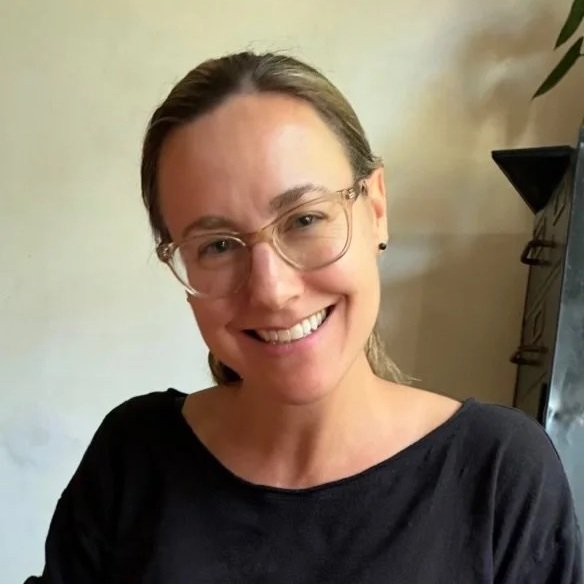
Hillary Seith
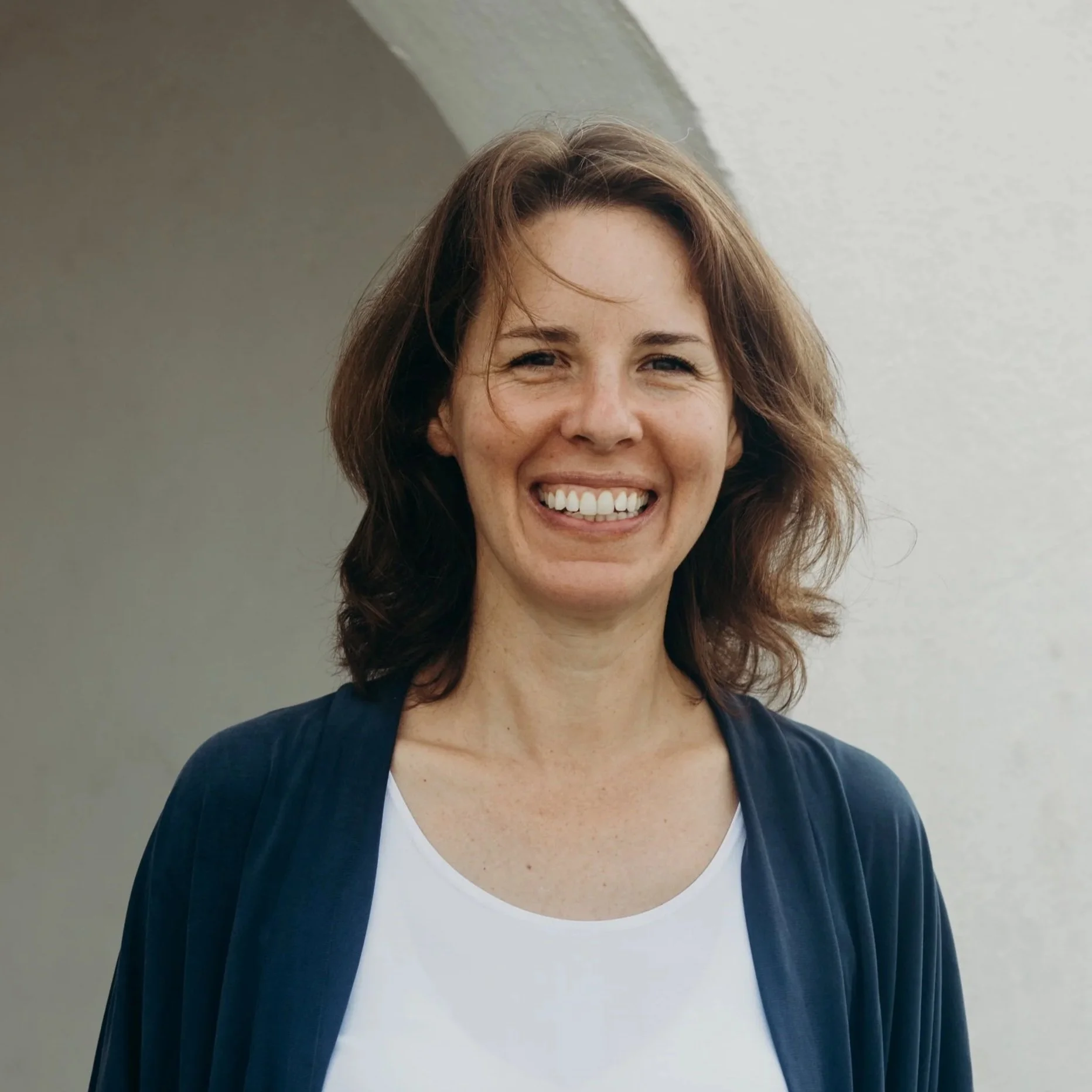
Tara Jenkins
I’ve got a couple of things I’m doing that I’d call my life’s joy (formerly called life’s work). Being a mom to my two kids gives me a chance to directly influence two people that will do great things in this beautiful, chaotic, wild world. Yes!
My life’s joy is also helping leaders build inspiring organizations that they love. There’s no better way to spend precious life time! The unique organizations we create together impact so many people for the better.
I have been told I’m a catalyst for transformation. To do this work I have a commitment to be awake in every aspect of my life, a commitment to equity and abundance, and a vow to be content in being both polished and a messy work in progress.
Witty things make me laugh. Kindred spirits fill me up. I love the sky, trees and water. Ask me to travel, sing, dance, hike, or see live music and I’m immediately in. Skiing and camping are a blast once you’ve started but the prep almost makes me not want to go. Someday I’ll be deeply settled in my body and soul and helping others to do the same.
And yeah, I have all those credentials one typically needs to be declared legit. Twenty-five plus wisdom-building years grinding it out as a global HR leader; Undergrad in Human Resources, Masters in Organizational Development & Leadership, Certifications galore. In 2019, I became one of the world’s first Certified Conscious Capitalism Consultants.
Our work together will fill everyone, including us, with joy and inspiration. Yes, we can do that! Yes, that’s what we are doing! Join us!
Hello, Tapestry sisters – I am grateful to be in this emergent community with all of you.
I have lived for over two and a half decades in the Philadelphia area, though I grew up outside of Boston. My known lineage on this continent stretches back on my father’s side to English colonizers who arrived in Maine and Massachusetts in the late 1600s and early 1700s, and on my mother’s side to Russian Ashkenazi Jews who emigrated to Boston in the early 1900s.
The land where I reside today was stewarded by the Lenni-Lenape for over ten thousand years before it was swindled by the son of William Penn in the notorious Walking Purchase of 1737. Similarly, the land where I grew up was stewarded by the Pennacook and Pawtucket peoples, who first lost the land through a disingenuous legal transfer in 1646, and ultimately through disease and genocide during King Philip’s War in the late 1670s.
I share the above context because I know that my role as a white body in liberation work begins with an honest reckoning of my ancestors’ part in our nation’s history of brutality – and with awareness and curiosity about the intergenerational lineages that wire my body.
I am also a mother of two children – a nineteen-year-old daughter, Juliet, and a sixteen-year-old son, Xander – as well as a wife to my husband, Gary, who grew up in the Philadelphia area and whose extended family still resides here.
Professionally, I have worked for the past decade at a major financial services institution as a diversity, equity, inclusion and employee engagement specialist. In this role, I observe the impacts of structural supremacy and grind culture on bodies every day – including my own – and I do my best to push on the edges of change from within the structure. My work spans both strategy and practice, advancing inclusive leadership, cultivating cultures of belonging, and facilitating constructive dialogue across difference.
I came into this work early in my tenure at my organization as an ally member of our employee resource group for Black professionals. That experience was my initiation into learning what it means to practice allyship and advocacy in relationship with others and through my own actions.
For the last three years, I have been studying and practicing Somatic Abolitionism and Liberation with Resmaa Menakem. Through this work, I have steadily deepened an embodied anti-racist practice in community with other bodies, exploring my own role as a white body engaged in liberation work. I am still in the foothills of this journey, doing my best to unlearn whiteness each day.
I am profoundly grateful for the teachers, friends and communities – including Tapestry – who have helped me grow what Resmaa calls “communal glue,” which I experience as the connection that emerges when bodies practice together to build trust, metabolize trauma and help create spaces where more bodies can breathe.